

In the dynamic and competitive world of the travel industry, establishing a strong and distinctive brand has never been more crucial. Your brand is not just your logo or tagline; it’s the collective impression and experience your clients associate with your travel agency. It’s your promise to your clients and a testament to the unique value you offer, setting you apart from the rest.
One essential aspect of branding that often gets overlooked is website design. Your website is more than just a digital business card; it’s a 24/7 ambassador of your brand that can reach potential clients worldwide. It gives the first impression of your business to many of your potential clients and plays a significant role in their decision-making process.
But how does website design influence your brand perception? What elements should you consider when aligning your website design with your brand? This article will delve into the vital role of website design in shaping your travel agency’s branding, offering insights and strategies for creating a compelling and brand-consistent website. Let’s get started!
First Impressions Matter
In the digital era we live in, your website often serves as the front door to your travel agency. It’s usually the first point of contact potential clients have with your brand, and as the saying goes, “You never get a second chance to make a first impression.”
This first impression is largely influenced by your website design. Just like the exterior and interior of a physical store affect how customers perceive a business, the look and feel of your website can greatly impact how visitors perceive your travel agency.
A study by the Stanford Web Credibility Research project found that nearly half (46.1%) of people consider a website’s design the number one criterion for discerning the credibility of a company. If your website looks outdated, cluttered, or hard to navigate, visitors might question your professionalism and expertise, regardless of the quality of your services.
On the other hand, a visually appealing website with a user-friendly design can instantly create a positive impression. It tells your visitors that you value their experience and have invested time and resources into creating a pleasant online environment for them. Elements like consistent color schemes, high-quality images, intuitive navigation, and coherent typography reflect your attention to detail and commitment to quality.
Remember, your website is a reflection of your brand. Every element should align with your brand’s identity, values, and the unique experience you offer to your clients. Make sure it leaves a lasting, positive impression that compels your visitors to explore further and ultimately choose your services for their travel needs.
Website Design Reflects Your Brand Identity
Website design goes beyond creating a visually pleasing interface—it’s a powerful tool to communicate your brand identity. Your brand identity is a combination of your values, how you communicate your product or service, and what you want customers to feel when they interact with it. In essence, your brand identity is the personality of your business and a promise to your customers.
In the context of website design, every design element from color scheme, typography, imagery to logo should echo your brand identity.
Color Scheme: Colors evoke emotions and have meanings. For instance, blue often conveys trust and reliability, while green is associated with calm and growth. For a travel agency, a vibrant and warm color palette might communicate the exciting and adventurous aspect of your services. Conversely, a cool color scheme might underscore a focus on relaxation and luxury travel. The key is to choose a color scheme that aligns with your brand personality and the feelings you want to evoke in your visitors.
Typography: The fonts you use on your website also send a powerful message. Serif fonts often convey tradition and respectability, while sans-serif fonts are viewed as modern and clean. A well-chosen font can reinforce the impression that you are professional and reliable.
Imagery: High-quality, relevant images can speak volumes about your brand. As a travel agency, your choice of images can transport website visitors to different destinations, giving them a taste of the experiences they can expect. Make sure that the images you use align with your brand message. For example, if you specialize in luxury travel, use images that convey opulence and exclusivity.
Logo: Your logo is arguably the cornerstone of your brand identity. It should be prominently displayed on your website, preferably in the header, and should be instantly recognizable. A well-designed logo can inspire trust, recognition and can succinctly convey your brand ethos.
Remember, consistency is key. Every design element on your website should work together to create a cohesive and compelling brand story. This synergy reinforces your brand identity and helps visitors understand at a glance what your travel agency stands for.
User Experience (UX) as a Part of Your Brand
User Experience (UX) in website design isn’t just about usability; it’s about the overall experience a visitor has when interacting with your site. It encompasses everything from how easy it is to navigate your website, the intuitiveness of your site structure, to the emotional response your site evokes. In essence, good UX design doesn’t just make your website user-friendly—it makes it a pleasure to use.
Now, you might wonder, how is UX connected to brand perception? The answer lies in the simple fact that every interaction a customer has with your brand shapes their perception of it, and your website is a significant point of interaction.
A website that’s difficult to navigate, slow to load, or filled with irrelevant information, is likely to frustrate visitors, leading to a negative perception of your brand. On the other hand, a website that’s easy to use, quick to load, and filled with relevant, helpful content, can create a positive impression, leading visitors to see your brand as trustworthy, professional, and reliable.
But the connection between UX and branding goes even deeper. Every detail of your website’s UX—from the way your menu is organized to the simplicity of your booking process—should align with and reinforce your brand values. For instance, if your travel agency prides itself on its customer service, your website could reflect this through features like live chat support, easy access to customer service contacts, and a streamlined booking process.
In essence, every aspect of your website’s UX should be designed with your brand identity in mind, creating a consistent, positive experience that solidifies your brand’s image in the minds of your customers. Good UX design isn’t just about making your website easy to use—it’s about making your brand memorable and engaging.
Consistency Across Web and Other Brand Touchpoints
Consistency is a cornerstone of successful branding. Your brand is more than just your logo or color scheme—it’s the sum total of all the experiences and interactions your customers have with your travel agency. That’s why it’s crucial to ensure that your branding remains consistent across all touchpoints, including your website, social media platforms, email marketing, brochures, and any other place your brand makes an appearance.
But why exactly is consistency so important? The answer lies in the power of repetition. When customers encounter the same branding elements—like your logo, color palette, typography, tone of voice, and messaging—across different platforms and mediums, they start to form a clear and consistent image of your brand in their minds. This consistency fosters a sense of familiarity and trust, which are key to building strong customer relationships.
Now, how can you achieve brand consistency across your website and other touchpoints? Here are a few tips:
- Develop a Brand Style Guide: This document should outline your brand’s visual and verbal identity, including specifics about your logo, color scheme, typography, imagery, tone of voice, and messaging. This guide should be referenced every time a new piece of content is created for your brand, ensuring consistency across all platforms.
- Audit Your Existing Materials: Regularly review your website, social media posts, emails, and other marketing materials to ensure they align with your brand style guide. Look for any discrepancies and correct them.
- Train Your Team: Everyone who creates content for your brand should be well-versed in your brand style guide. Regular training sessions can ensure that all team members are on the same page about how to represent your brand.
By ensuring that your branding remains consistent across your website and other brand touchpoints, you can create a unified brand experience that leaves a lasting impression on your customers. And in the highly competitive world of the travel industry, that kind of brand consistency can be a game-changer.
The Role of Content in Website Branding
While design elements like color scheme, typography, and logo play a crucial role in your website’s branding, the content you put forth is equally significant. Your website’s content—be it blog posts, service descriptions, about us sections, customer testimonials, or any other written or visual content—has a substantial role in shaping your brand’s image and message.
The importance of website content to your brand can’t be overstated. Effective, brand-aligned content does more than just inform—it engages, inspires, and drives action. It communicates to your target audience who you are, what you stand for, what you offer, and why they should choose your travel agency over the competition.
But how can you create compelling, brand-aligned content for your travel agency’s website? Here are some tips:
- Know Your Audience: Understanding your target customer is key to creating content that resonates. What are their interests, concerns, aspirations, and travel preferences? Use this information to guide your content strategy.
- Consistent Tone of Voice: Your brand’s tone of voice should be consistent across all your content. Whether you opt for a friendly, professional, adventurous, or luxurious tone, make sure it’s in line with your brand identity and appeals to your target audience.
- Deliver Value: The best website content is that which provides value to the reader. This might mean offering travel tips, destination guides, insider insights, or expert advice on travel planning.
- Use Storytelling: Storytelling is a powerful tool for engaging readers and making your brand more memorable. Share stories about your clients’ travel experiences, your team’s adventures, or the origins of your travel agency.
- Incorporate SEO: While you should always write for humans first, don’t forget about search engines. Incorporating SEO strategies into your content creation can help your travel agency’s website rank higher in search results, making your brand more visible online.
By leveraging content that aligns with your brand and resonates with your audience, you can amplify your travel agency’s online presence and reinforce your brand’s message. Remember, your website’s content isn’t just about telling your audience what you do—it’s about showing them why they should travel with you.
SEO as an Element of Website Design
Search Engine Optimization, or SEO, is an essential part of website design that significantly contributes to brand visibility. While SEO might not be the first thing that comes to mind when you think of branding, it plays an important role in getting your brand in front of the right people at the right time.
SEO involves optimizing your website and its content to make it more appealing to search engines. The better optimized your website is, the higher it will rank in search engine results, increasing your visibility to potential customers. In turn, higher visibility can lead to more traffic, more leads, and ultimately, more conversions for your travel agency.
But how can you incorporate SEO strategies into your travel agency’s website design to boost your brand’s visibility? Here are some tips:
- Use Relevant Keywords: Understand what terms or phrases your potential customers are searching for and incorporate these keywords into your website’s content, meta descriptions, and alt text.
- Optimize for Mobile: With an increasing number of people browsing the web on their mobile devices, it’s crucial to have a mobile-friendly website design. Search engines favor websites that are optimized for mobile, which can help improve your ranking.
- Improve Site Speed: A fast-loading website not only provides a better user experience but is also favored by search engines. Optimize your website’s speed by compressing images, using website caching, and minimizing the use of JavaScript and CSS files where possible.
- Create High-Quality Content: Search engines reward websites that provide valuable, relevant content. Regularly updating your website with high-quality content can help improve your ranking.
- Use Internal and External Links: Including internal links (links to other pages on your website) and external links (links to reputable websites) can help search engines understand the content of your website better and can improve your SEO ranking.
Remember, while SEO can significantly enhance your brand’s visibility, it’s not a one-time task but rather an ongoing effort. Regularly updating your SEO strategy based on current best practices and search engine algorithm changes is key to maintaining and improving your brand’s online presence.
Case Study: Successful Travel Agency Website Designs
Studying successful examples can provide a wealth of insights when crafting your own website branding strategy. Here are a few travel agencies that have used their website design effectively to bolster their brand.
Intrepid Travel
Intrepid Travel‘s website is a brilliant example of effective branding through website design. As soon as you land on their homepage, their commitment to responsible travel and real-life experiences shines through. The use of stunning imagery from their tours not only provides visual appeal but also underscores their brand ethos of authenticity. The navigation is clear, making it easy for users to find exactly what they’re looking for. Overall, Intrepid’s website design reflects its brand identity flawlessly and offers an excellent user experience.
Lesson Learned: Use visuals and website content to reinforce your brand ethos. Ensure your website is easy to navigate, enhancing the overall user experience.
Black Tomato
Black Tomato stands out with its luxurious and minimalistic design. Their use of high-quality, evocative images, paired with a sleek black and white color palette, effectively communicates their unique selling proposition of offering luxury, tailor-made travel experiences. Their website design is intuitive, making it easy for users to explore various travel packages, learn more about their offerings, and get in touch with them.
Lesson Learned: Your website’s design should reflect your unique selling proposition. In the case of Black Tomato, the luxury and personalized service they offer are immediately evident from their website’s design.
G Adventures
G Adventures‘ website makes a strong impression with its bold color scheme and impactful images. The website is easy to navigate, and the copy is compelling, quickly drawing users in. The website perfectly encapsulates their brand ethos of adventure and community-driven travel.
Lesson Learned: Don’t be afraid to use bold designs to make an impact. However, ensure it aligns with your brand ethos and identity.
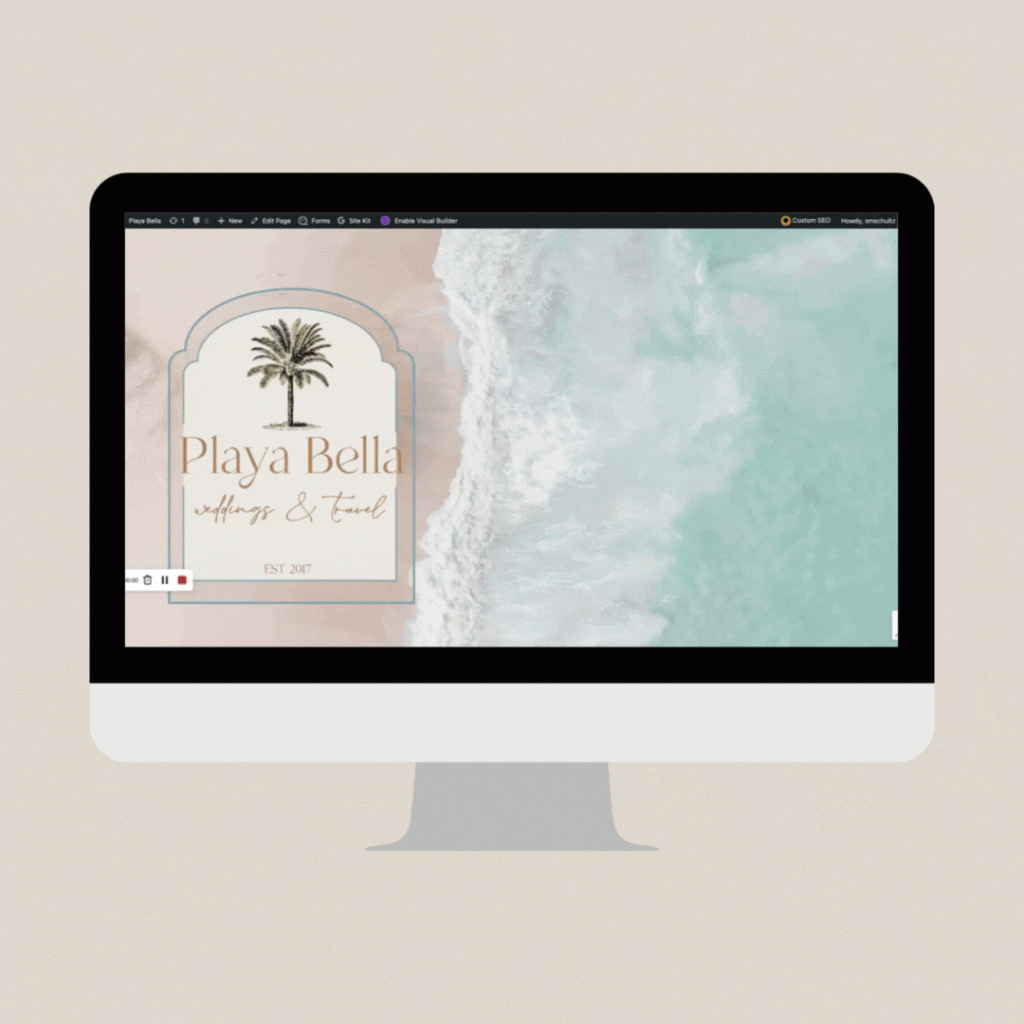
Playa Bella Weddings & Travel
Playa Bella Weddings & Travel excels in representing their niche focus – destination weddings and romantic travel experiences. As soon as you land on their website, you are welcomed with beautiful beach imagery and a warm color palette, instantly transporting you to a beachfront wedding. The website has a clear and user-friendly layout, making it easy for visitors to explore their offerings, view wedding packages, and get in touch with the team.
Lesson Learned: Specialized travel agencies like Playa Bella show the power of tailoring your website design to your niche. The visuals, colors, and content all speak directly to their target audience, creating an emotional connection and immediately conveying their specialized service.
Travel With Class

Travel With Class does an excellent job of reinforcing its brand promise right in its website design. As the name suggests, they cater to luxury travel experiences. Their website showcases this with elegant typography, a sophisticated color palette, and high-quality images of lavish destinations and accommodations. Each element on the site exudes a sense of class and luxury that resonates with their high-end clientele.
Lesson Learned: Travel With Class demonstrates the power of aligning every aspect of your website design with your brand’s promise and values. They effectively communicate a clear message about what they offer, who they serve, and what kind of experience clients can expect. This level of branding consistency enhances their credibility and builds trust with their prospective customers.
These examples illustrate how a strategic and well-executed website design can significantly contribute to a travel agency’s overall branding. By incorporating elements that mirror your brand’s ethos and appeal to your target audience, you can create a strong brand presence online.
How Sarah Crosley + Co Can Assist with Your Website Design
Creating a robust, compelling, and brand-aligned website may seem like a complex endeavor, but it doesn’t have to be. This is where Sarah Crosley + Co can step in to provide much-needed guidance and expertise. We specialize in crafting brand strategies and web designs that resonate with your target audience and reinforce your brand image.
Our approach to website design is rooted in understanding your brand’s unique identity and translating it into a visually stunning and user-friendly online platform. We pay keen attention to all elements of design, including color scheme, typography, user experience, content, and SEO. We understand that each component plays a significant role in conveying your brand message and shaping the perception of your travel agency.
Moreover, we’re committed to ensuring brand consistency across your website and other brand touchpoints. We believe that your brand should tell a coherent and captivating story, regardless of where your customers interact with it.
In addition, we appreciate the power of good content and its ability to engage visitors while enhancing your brand’s image. Our team will help you strategize and create compelling content that aligns perfectly with your brand and appeals to your target audience.
Finally, with our in-depth knowledge of SEO, we ensure that your website is not just aesthetically pleasing, but also primed to perform well in search rankings. This is vital in increasing your brand’s visibility and drawing more traffic to your site.
With Sarah Crosley + Co, you’re not just getting a website; you’re getting a comprehensive brand representation that serves as a powerful tool for your travel agency’s success.
Wrap Up & Next Steps
Your website design plays a pivotal role in your travel agency’s branding strategy. It’s the digital facade of your business and often the first point of interaction between you and potential clients. A well-designed, brand-aligned website can create positive first impressions, reflect your brand identity, offer a seamless user experience, and maintain consistency across various brand touchpoints. Moreover, it can serve as a platform for engaging content and an avenue to improve your brand’s visibility through effective SEO practices.
Understanding the power of good website design is the first step; implementing it is another challenge altogether. At this point, you might find yourself questioning whether your current website truly encapsulates your brand or if your branding strategy is effectively reflected in your website design. If these queries resonate with you, or if you’re ready to take your website and brand to the next level, we are here to assist.
At Sarah Crosley + Co, we’re passionate about helping boutique travel agencies like yours carve a distinct identity through strategic branding and impactful website design. Let’s work together to create a compelling digital platform that not only tells your unique brand story but also resonates with your audience and drives your business forward.
Interested in how we can elevate your website and brand? Reach out to us for a free consultation today. You’re one call away from transforming your travel agency’s website into its most powerful branding tool.




0 Comments